Discovering, community, and transformation with Polaroid photography
When a group of us gathered recently for a creative workshop at Exeter Quay, we set out to experiment with how photography can shift perspective, deepen awareness, and bring people together. What began as a simple walk with a list of words became an exercise in presence of mind , reframing, and collaboration. Out of our shared process, a collective artwork emerged, and with it an understanding of looking and seeing.
This blog reflects on the journey we took together, the metaphors we explored, and the way creativity can support healing, connection, and community.
Beginning with Presence
The workshop started simply: we walked, talked and connected. Moving together along Exeter Quay, we allowed ourselves to slow down and notice the world around us, boats rocking gently against the quay wall, old brick buildings with their weathered textures, the shifting play of light and shadow, and the quiet details often not seen.
To guide this process, we worked with ten shared words:
Each participant took a single photograph for each word, using only their phone. The idea was not to overthink but to respond intuitively: one image, one word, one moment.
This stage of the workshop was about presence. By focusing on what was immediately before us, we began to see our environment.
Reframing the Image
Back in the studio, we shifted from walking to looking more closely at what we had captured. Here, we revealed the second stage of the process: the Polaroid square format.
Every rectangular photo was cropped into a square. This small act carried a powerful metaphor: the way we frame something changes how we perceive it. Cropping tightened focus, shifted relationships, and sometimes uncovered unexpected details that had been hidden at first glance.
Each participant chose five square images to carry forward. This step encouraged decision-making, reflection, and a sense of ownership: from many possibilities, which images felt strongest, most meaningful, or most surprising?
Creating the Communal Grid
With all the chosen images printed, we moved to the next stage: arranging them into a single communal artwork.
We laid the Polaroid-style prints side by side, building them into a grid formation. This grid quickly became more than just a display method, it was a conversation. Where should certain images sit? Which words should be represented, can we use the same word? Which colors connected across participants’ work? Which textures echoed one another?
We collectively discussed and arranged the grid until it felt balanced, alive, and shared. What emerged was not just a collection of individual photographs but a collaborative piece, a mosaic of perspectives.
In this moment, the workshop shifted from individual seeing, to shared creation. The artwork became a visual reminder that although each of us looks through our own lens, together we create something richer and more connected.
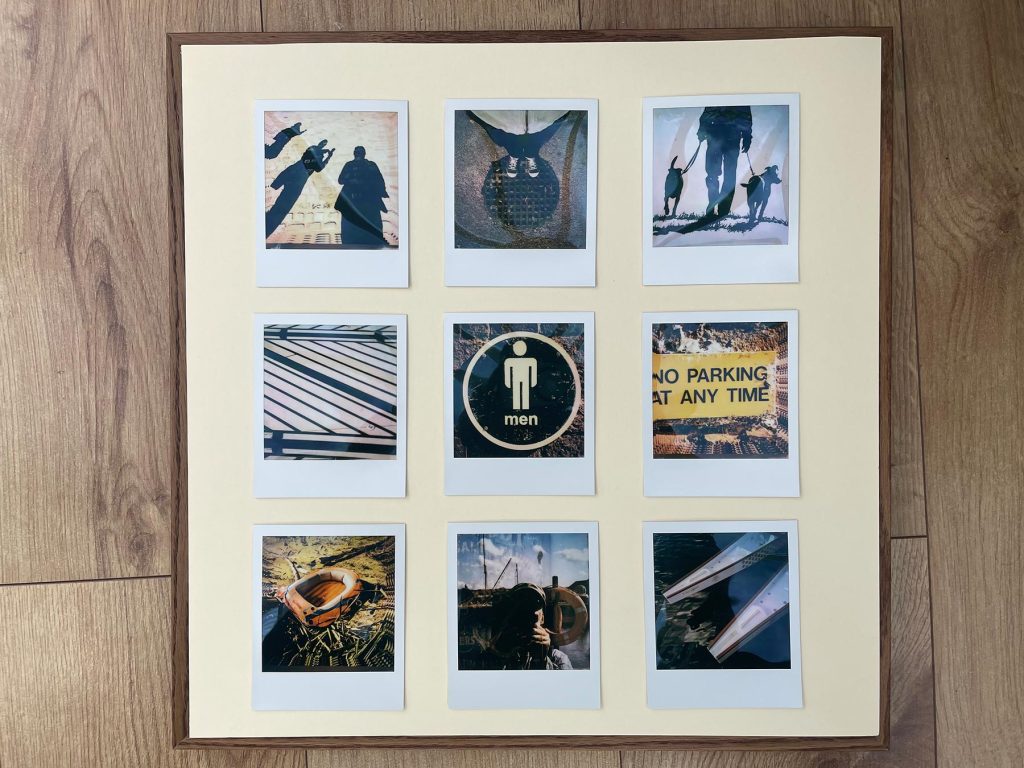
Naming the Work: Look Again
When the grid was complete, we stood together and took it in. The act of viewing it as a group felt like a pause, a chance to reflect not just on the images but on the journey they represented.
Out of this reflection came a title. Collectively, we named the piece – Look Again.
The phrase carries multiple layers of meaning. It speaks to the process of returning to the same scene with a different perspective, of reframing and noticing what might have been overlooked. It also resonates with the deeper metaphor of the workshop: the possibility of re-seeing experiences, memories, and ourselves in new ways.
The Next Stage: Emulsion Lifts
Although we ran out of time in this first workshop, our journey does not end here. The plan is to take some of the chosen images into the next phase: Polaroid emulsion lifts.
An emulsion lift is a process where the surface layer of a Polaroid photograph is gently separated from its backing and transferred onto a new surface, such as watercolor paper. The result is delicate, fluid, and unpredictable, an image literally transformed.
This stage will become its own standalone workshop, where participants can take the photographs they have already reframed and bring them into another life. Through peeling, floating, layering, and reshaping, the emulsion lifts embody the idea of transformation, that something fragile and imperfect can become something beautiful, unique, and strong.
Why This Matters
Workshops like this are not just about photography. They are about:
- Healing through creativity – finding safe, non-verbal ways to express, reflect, and reframe.
- Working together – building communal artworks that remind us we are not alone.
- Breaking isolation – sharing perspectives, seeing connections, and creating collectively.
- Embracing transformation – discovering how both images and stories can shift, change, and evolve.
For male survivors of CSA, creative workshops like this can provide a supportive and empowering space. The metaphors of reframing, grid-making, and transformation allow participants to explore difficult themes indirectly, through image and process, while also experiencing the joy of making something new.
Looking Ahead
The first iteration of this workshop, Reframing Through Polaroid, showed us the power of combining attention, photography, and collaboration. It offered participants a chance to walk, to see, to capture, and to create together.
The communal grid we made is not the end but a beginning. With the next workshop, we will move into the transformative stage of emulsion lifts, continuing the metaphor of change and resilience.
As we carry this work forward, we are reminded of the simple yet profound truth behind the name we chose: sometimes the most important thing we can do is to look again.