Rediscovering Ourselves Through an Old Process
It was great to return to Exeter Phoenix, this time to run a wet plate photography workshop, a creative workshop in Exeter that brought together a group of male CSA survivors. Participants engaged in a hands-on, interactive session exploring portraiture through one of photography’s oldest and most fascinating processes, wet plate photography.
For many survivors, looking at oneself is a complicated and often painful experience. Feelings of shame, guilt, or self-criticism can become embedded over time, shaping how a person sees themselves, not just emotionally, but physically. To stand in front of a camera and truly see yourself can feel daunting, even exposing. But to do so in a supportive, creative environment offers something different, a chance to confront those feelings and perhaps begin to see beyond them.
The wet plate collodion process, invented in the 1850s, feels almost magical in our digital age. It is slow, hands-on, and wonderfully tactile, a craft that requires both patience and curiosity. During the wet plate photography workshop, wet plate photographer Stephen Raff guided us through every stage of the process, sharing his deep knowledge with enthusiasm.
Understanding the Wet Plate Collodion Process
He began by introducing the history of wet plate photography and explaining why it remains so captivating today. Unlike digital photography, where an image appears instantly on a screen, the wet plate process demands a more deliberate approach. Every step must be done by hand, with care and precision.
First, a glass plate is coated with collodion, and while the collodion is still wet, the plate is dipped into a bath of silver nitrate, which makes it light-sensitive. This is where the “wet” in wet plate comes from, as the plate must remain moist throughout the entire process, from coating to exposure to development.


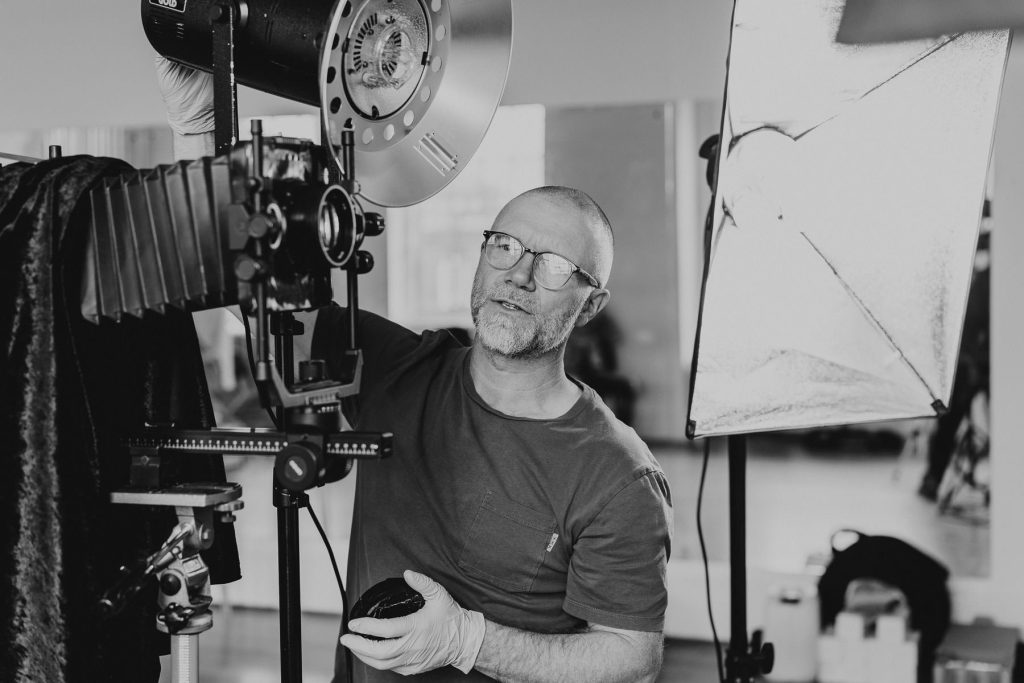


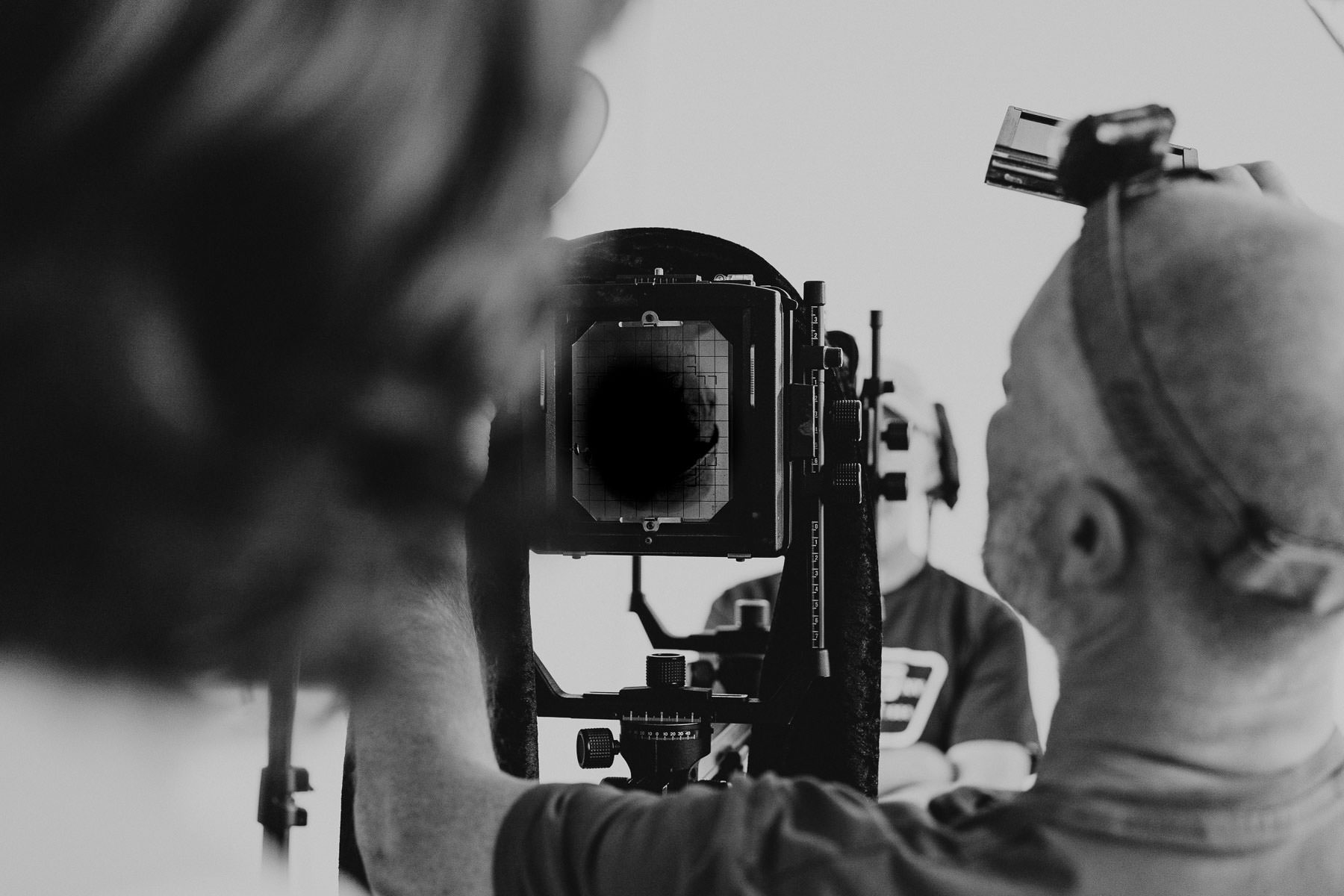

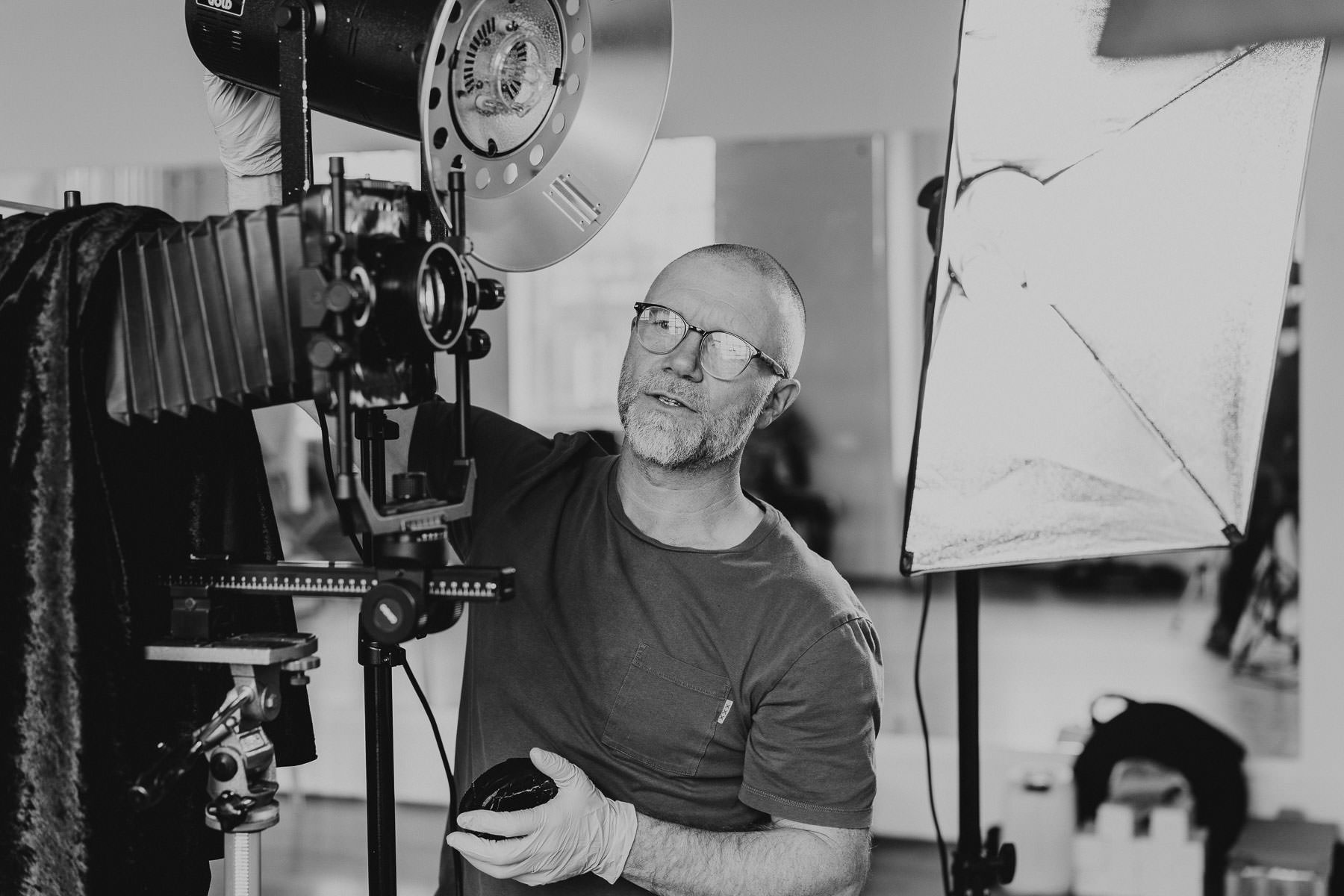
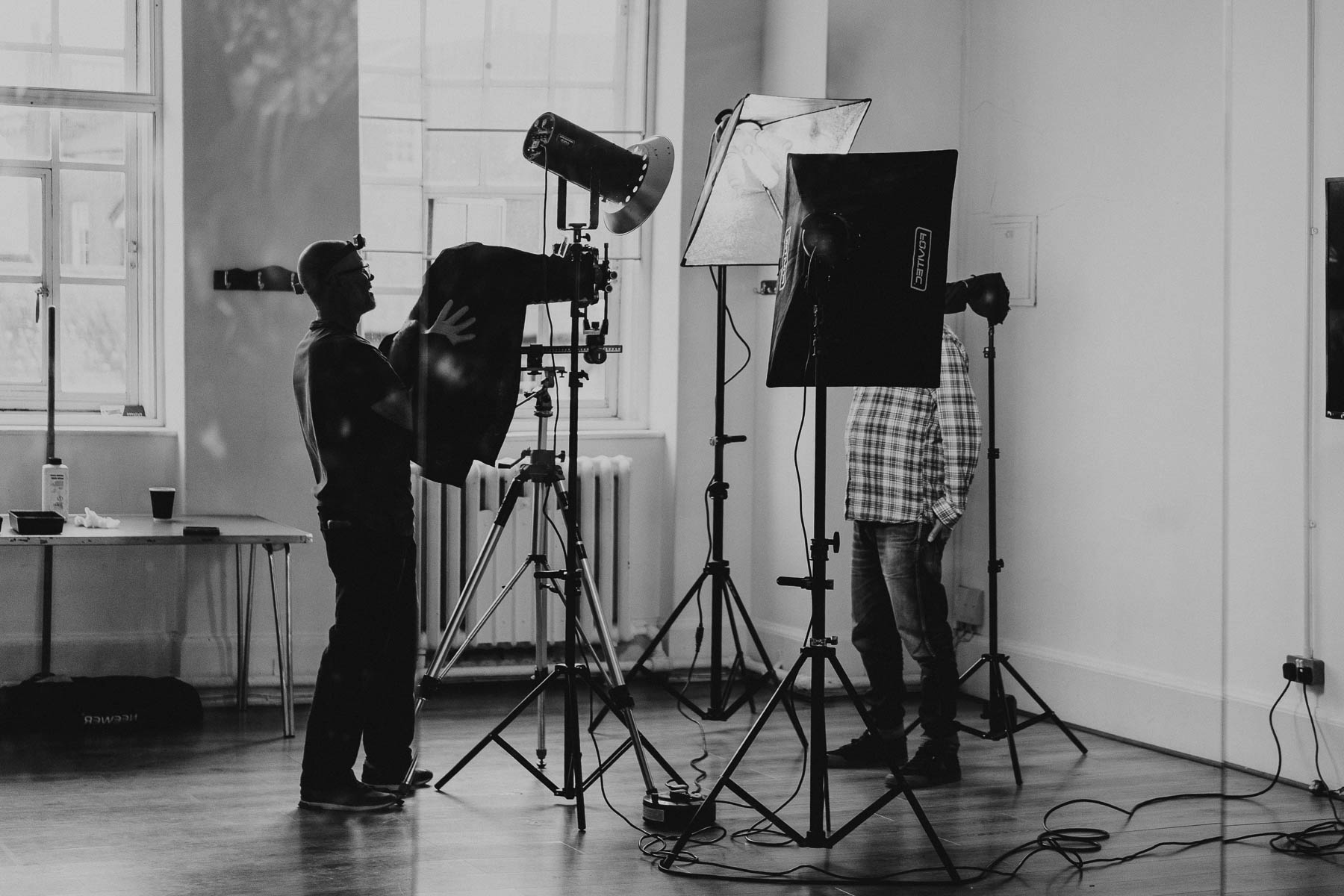
Once sensitised, the plate is loaded into the camera while still damp, and the subject takes their place. The exposure is made using natural or studio light, in our case, continuous light and flash. As the exposure was long, around seven seconds, we used a headrest to help keep still during the shot.
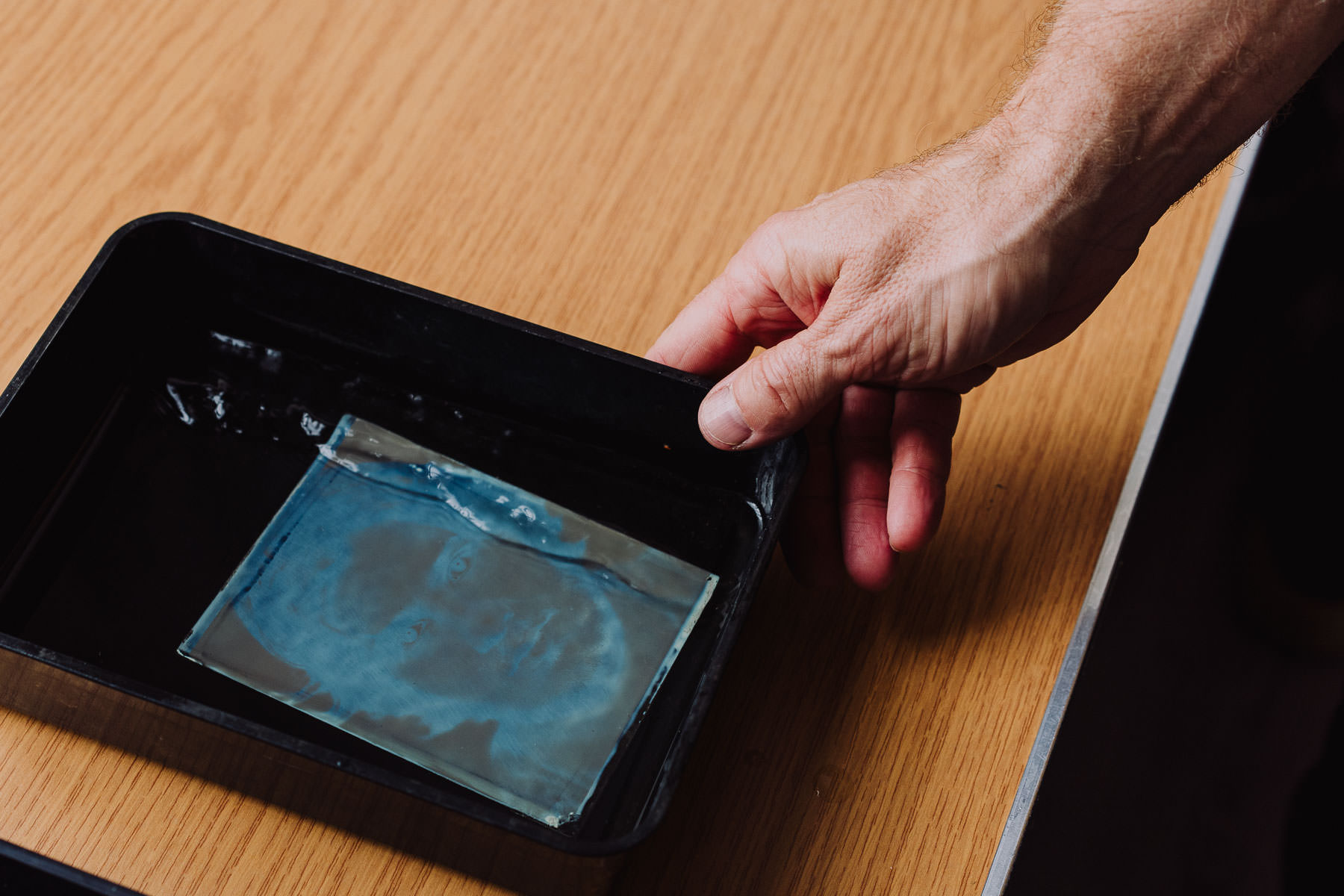
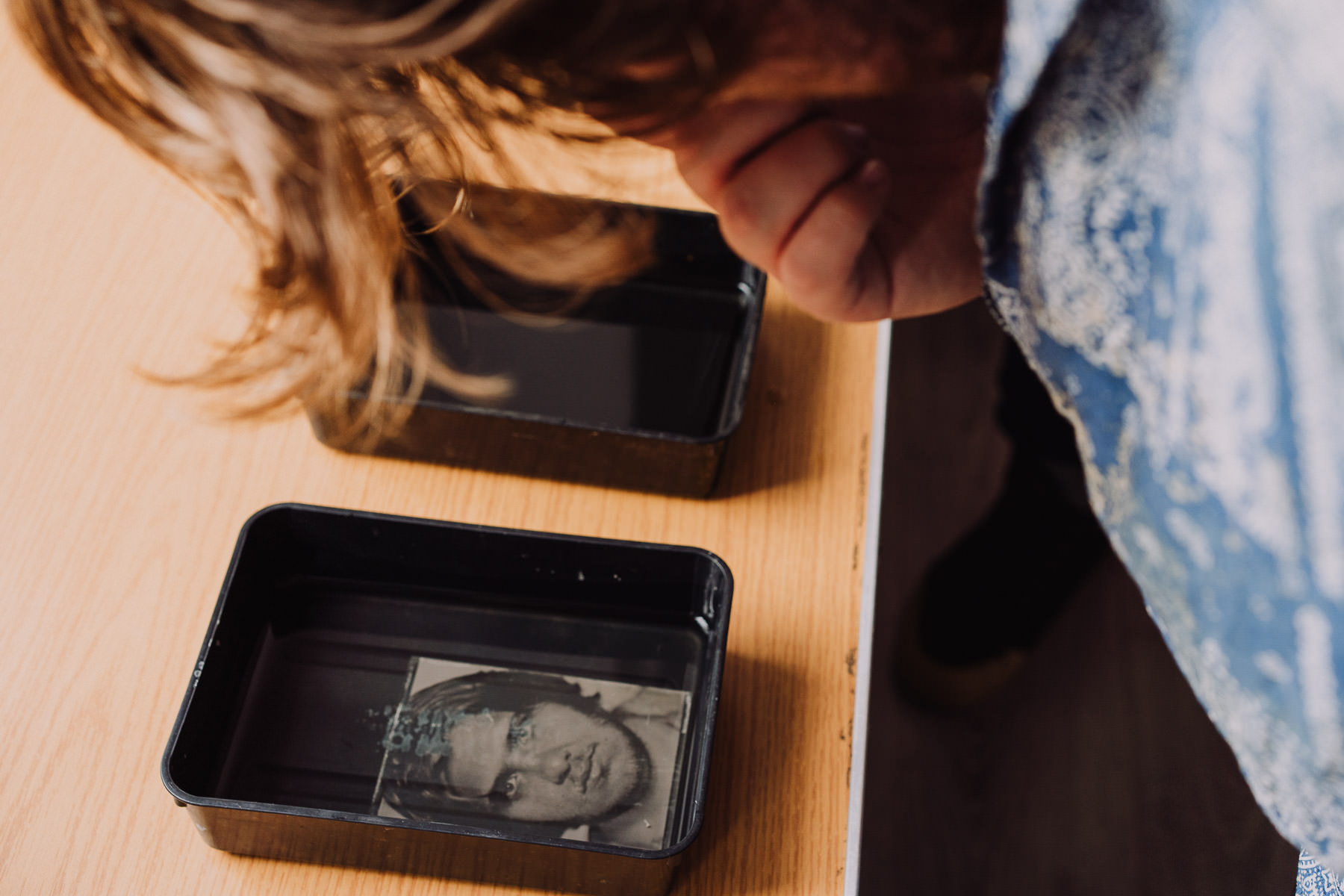
After exposure, the plate is developed in a darkroom while it’s still wet. As the image slowly appears on the surface, there’s a sense of wonder and quiet awe. The final step is fixing the image, which transforms the milky negative into a visible photograph. This process has a feeling of pure alchemy, as the chemicals react, the plate transforms like magic before your eyes, revealing the image through the mist. It’s truly an amazing process, one that never loses its impact, no matter how many times you see it.
A Reflection Made Visible
For the men who took part, seeing themselves appear on the wet plate was an emotional and thought-provoking moment. We spoke about how often we avoid looking in mirrors or photographs because of struggles with self-image, something sadly common among male survivors of childhood sexual abuse.
But the wet plate image is different. Its imperfections, soft edges, and historical aesthetic seem to strip away the harshness of modern self-judgement. It offers a reflection that feels both truthful and forgiving. Perhaps, in some way, it shows not just how we look, but how we hope to be seen, strong, dignified, human.
Seeing Yourself in a New Light
One survivor reflected on this experience, saying:
“Yes, I think the wet plate process does offer us a version of ourselves that is interesting and different, and allows us to view ourselves literally in a new light! When I look at the picture created from the workshop I can’t help but see my history and experiences, good and bad, written on my skin – and whether this is fanciful, idealised, a true interpretation or simply a nice metaphor (or all of these!) doesn’t really matter. There is a beauty there and something powerful which draws you in.” – The Unnamed Survivor.
The process felt transformative. Each portrait seemed to hold a quiet strength, a stillness that invited both the viewer and the subject to linger rather than turn away. To stand before the camera, to hold still, and to face yourself honestly is a courageous act. To do so in the company of others who understand what that means makes it even more powerful, demonstrating the potential of photography and healing.
The Role of Focused Light
This workshop was hosted by Focused Light, a project created to use photography as a creative means of expression for male survivors. The aim has always been to bring men together through art, to combat isolation, share stories, and build community through creativity.
Building Community Through Creativity
Exploring the wet plate process felt essential to that mission. It connects us to the very roots of photography, to light, chemistry, and human presence, and reminds us that creativity is not just about the outcome but the process itself. Initiatives like this male survivors art project help participants engage with both themselves and others through visual storytelling.
Gratitude and Reflection
We extend our deepest thanks to wet plate photographer Stephen Raff for leading such an engaging and interactive workshop. His generosity in sharing both his knowledge and his time made the experience memorable for everyone involved.
A huge thank you also to Focused Light director Ezra Rickman for allowing us to use his portrait and for his continued support.
Looking Ahead
The day reminded us that art, in any form, has the power to shift how we see ourselves and how we connect with others. The wet plate portraits are not just photographs, they are testaments to resilience, courage, and the beauty of confronting one’s own reflection.
As we continue to grow Focused Light, we remain committed to offering opportunities for male survivors to come together through creativity, to be seen, to be heard, and to be supported. Whether through photography, art, or other forms of expression, each project reaffirms what we already know, there is incredible strength within this community.
Thank you to everyone who came, participated, and shared in this experience. Together, we continue to bring light into focus.